
General Water Safety
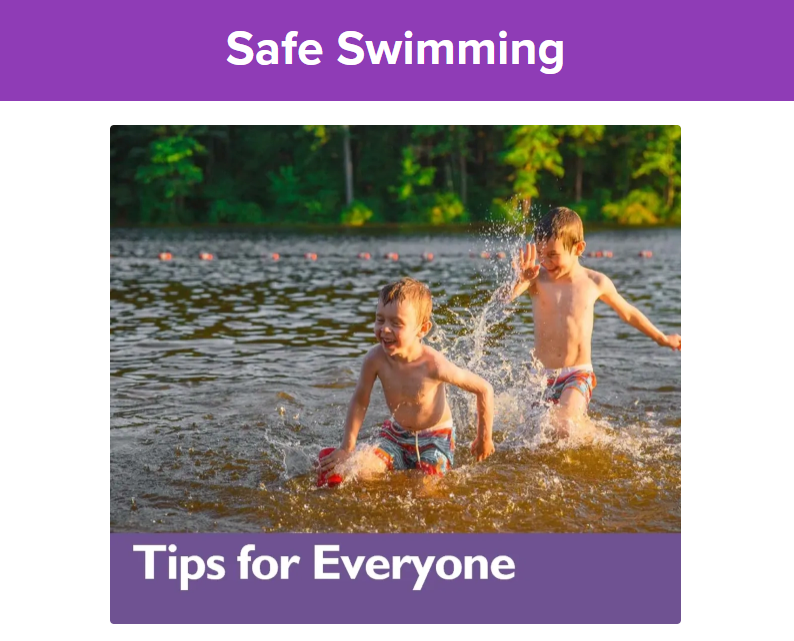
Two boys joyfully splash in a lake — a reminder that water fun should always be paired with caution.
Always swim with a buddy and watch out for each other.
Keep a close eye on children at all times.
Be mindful of medical conditions that may increase drowning risk.
Avoid water deeper than chest level if you’re not a confident swimmer.
Never swim while using alcohol or drugs.
Don’t dive into water less than eight feet deep or of unknown depth.
Pay attention to weather conditions and avoid swimming during storms or lightning.
Choose lifeguarded beaches or pools whenever possible.
Know the Signs of Drowning
Drowning is quick and silent — and it can happen to anyone. A person who is drowning may look like they’re splashing or waving when they’re actually struggling to stay afloat. Learn basic swimming skills, consider taking CPR, and remember that rescue breathing, first aid, and calling 911 can save a life.
Keep Kids Safe
Kids and teens face the highest drowning risk.
Keep young children within arm’s reach, even in shallow water.
Lifeguards and life jackets are helpful, but they do not replace active adult supervision.
Ensure your home pool has a secure enclosure to prevent unsupervised access.
Stay Healthy in the Water
Germs spread easily in water.
Don’t swallow water, and rinse off before and after swimming.
Avoid swimming in cloudy or discolored water.
Stay out of the water if you’re sick with diarrhea or have open cuts or wounds.
Remind children to take frequent bathroom breaks.
Don’t pee or poop in the water.
Safe Boating Practices
A multi‑generational family splashes in a bright blue pool — but boating requires its own safety rules.
Wear a U.S. Coast Guard‑approved life jacket (I–III label).
Never rely on inflatable swim aids like water wings or floats for safety.
Read the Full Article
For the complete ParentSquare post, visit: https://www.parentsquare.com/feeds/82799265
For additional guidance, explore New York State’s Swim Safe resources: